
Last updated on September 13th, 2025 at 11:24 am
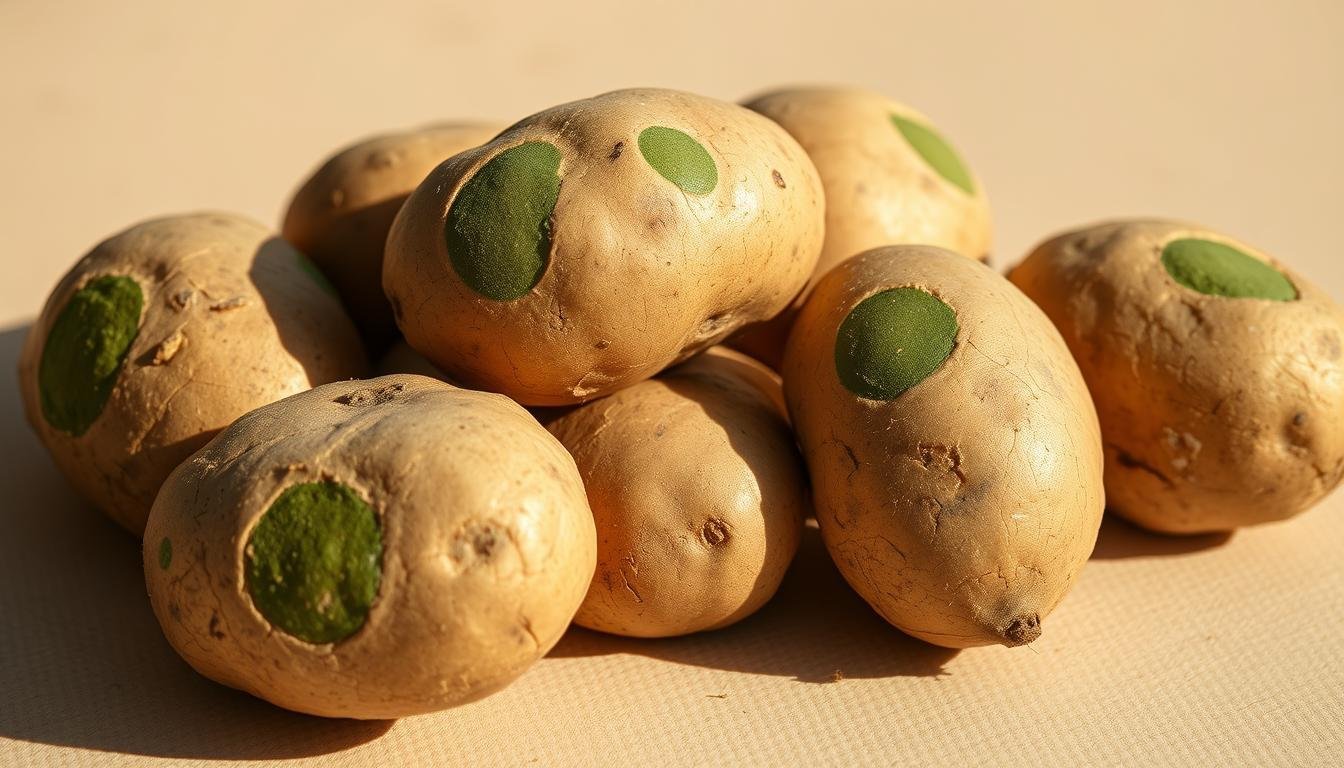
Have you ever seen green spots on your potatoes and wondered if they’re okay to eat? Seeing green spots can be scary, making you wonder if they’re still good to eat.
It’s right to worry about potato safety when you see green. This color might mean there’s a toxin present. We’ll look into why this happens and how to tell if your potatoes are still good.
Knowing if green potatoes are safe is key to a healthy diet. We’ll get into the details to help you decide about the potatoes at home.
Contents
- 1 What Causes Green Spots on Potatoes
- 2 Understanding Solanine: The Hidden Danger
- 3 Can You Eat Potatoes with Green Spots?
- 4 Health Risks of Consuming Green Potatoes
- 5 Special Considerations for Children and Vulnerable Groups
- 6 How to Safely Handle Slightly Green Potatoes
- 7 Preventing Potato Greening at Home
- 8 Different Potato Varieties and Greening Susceptibility
- 9 Common Myths About Green Potatoes
- 10 Green Potatoes in Commercial Production
- 11 Alternative Uses for Green Potatoes
- 12 Conclusion
- 13 FAQ
- 13.1 What causes green spots on potatoes?
- 13.2 Is solanine toxic?
- 13.3 Can I eat potatoes with green spots if I peel them?
- 13.4 How can I prevent potato greening at home?
- 13.5 Are some potato varieties more resistant to greening?
- 13.6 Can I use green potatoes for animal feed or compost?
- 13.7 Are there regulations on solanine levels in commercial potatoes?
- 13.8 How can I check if a green potato is safe to eat?
What Causes Green Spots on Potatoes
Have you seen green patches on your potatoes? This green color comes from environmental factors.
Light is a big reason for green spots. If potatoes aren’t stored right, they get light. This makes them green and increases solanine, a harmful toxin.
Damage and certain conditions also make potatoes green. Here’s a quick look at what causes it:
| Cause | Effect |
|---|---|
| Exposure to Light | Production of Chlorophyll and Solanine |
| Physical Damage | Increased Susceptibility to Greening |
| Environmental Stress | Enhanced Solanine Production |
Knowing why potatoes turn green helps prevent it. Storing them right can avoid potato toxicity.
Understanding Solanine: The Hidden Danger
Solanine is a natural compound found in potatoes. It can become toxic if potatoes turn green. This happens when potatoes are exposed to light or get damaged.
When solanine levels rise, it can cause health problems. Symptoms include nausea, diarrhea, and even neurological issues in severe cases. Knowing how to manage solanine levels is key to staying safe.
Scientific Research on Solanine Levels
Scientists have studied safe solanine levels. They found that more than 20 mg per 100g of potato can be harmful. A study in the Journal of Food Science showed that green potatoes have higher solanine levels, making them unsafe to eat.
| Solanine Level (mg/100g) | Toxicity Risk |
|---|---|
| 0-10 | Low |
| 10-20 | Moderate |
| >20 | High |
Knowing the solanine levels in your potatoes is crucial. Taking steps to avoid this toxin is important.
To keep potatoes safe and reduce solanine intake, store them in a cool, dark place. Avoid eating green or sprouted potatoes. By understanding solanine, you can enjoy potatoes safely.
Can You Eat Potatoes with Green Spots?
Green spots on potatoes can be alarming. But, whether to eat or discard them depends on several factors. Look at how green the spots are and the potato’s overall condition.
If the green spots are minor and can be cut away, the rest might be safe. But, if the greening is widespread or the potato tastes bitter, it’s safer to throw it away.
Reducing Solanine Levels: Peeling and cooking potatoes can lower solanine levels. But, remember that cooking doesn’t remove all solanine.
| Condition | Action | Safety |
|---|---|---|
| Minor green spots | Cut away green parts | Generally safe |
| Widespread greening | Discard | Not safe |
| Peeling and cooking | Reduces solanine | More safe |
When deciding to eat potatoes with green spots, think about the potato’s age and storage. Potatoes exposed to light for too long are more likely to have green spots.
In summary, while minor green spots might not mean a potato is bad, it’s key to check the potato’s condition. Also, think about how to lower solanine levels. If unsure, it’s best to throw the potato away to avoid health risks.
Health Risks of Consuming Green Potatoes
Eating green potatoes can expose you to solanine, a harmful substance. Solanine is a toxin found in potatoes. It can cause health problems if you eat too much of it.
Green potatoes can lead to health issues due to solanine. You might feel sick to your stomach, like nausea and diarrhea. Or, you could experience headaches and dizziness.
High levels of solanine can cause even more serious problems. These include:
- Severe stomach pain
- Confusion and disorientation
- Fast heart rate and heart problems
It’s important to know these risks, especially for kids, the elderly, and people with health issues. Knowing about potato toxicity helps you choose safer potatoes.
To avoid solanine, don’t eat potatoes with green spots. Properly storing and handling potatoes can also help prevent green spots.
Special Considerations for Children and Vulnerable Groups
Green potatoes can be dangerous for some people, like children and pregnant women. It’s important to know the risks of eating these potatoes. This is especially true if you or a family member is in a vulnerable group.
Children are more at risk because of their small size and growing bodies. Pregnant women also need to be careful. Their health can affect the baby.
To keep these groups safe, watch what potatoes you eat. Look for green spots. If you find any, it’s best to throw them away.
Knowing the health risks of green potatoes is key. It helps keep everyone safe, especially those who are more vulnerable.
How to Safely Handle Slightly Green Potatoes
When you find potatoes with green spots, it’s important to handle them carefully. This is because the green color might mean there’s more solanine. But, there are ways to make these potatoes safer to eat.
The Taste Test Method
One easy way to check if a potato is too bitter is to taste it. Peel a small part and taste it. If it tastes bad, it’s safer to throw it away.
If the potatoes are just a little green, you can cut off the green parts. This can lower the solanine levels. Also, cooking can help. Boiling or baking can reduce solanine, but remember, it doesn’t get rid of it all.
| Method | Effect on Solanine | Safety |
|---|---|---|
| Peeling | Reduces solanine | Increases safety |
| Cooking (Boiling/Baking) | Partially reduces solanine | Moderately safe |
| Taste Test | Identifies bitterness | Helps in decision-making |
In short, to handle green potatoes safely, check them carefully, remove the green parts, and cook them right. By doing this, you can enjoy your potatoes while keeping the risk of solanine low.
Preventing Potato Greening at Home
Keeping potatoes from turning green is easy with the right storage. The best way is to store them in a cool, dark spot.
Here are some tips for proper potato storage:
- Store potatoes in a cool, dark place with temperatures between 40°F and 50°F (4°C and 10°C).
- Ensure good ventilation to prevent moisture buildup, which can lead to rot and greening.
- Use breathable containers such as paper bags or ventilated plastic bags to store potatoes.
- Avoid storing potatoes near strong-smelling foods, as they can absorb odors easily.
By following these potato safety tips, you can significantly reduce the risk of potato greening. It’s also important to regularly inspect your stored potatoes and remove any that show signs of greening or rot.
Proper potato storage not only helps in preventing potato greening but also keeps them fresh for a longer period. Remember, the key to safe and healthy potatoes is in how you store them.
Different Potato Varieties and Greening Susceptibility
Did you know different potatoes can handle greening in different ways? Some are bred to resist greening better, keeping them safe to eat longer.
How a potato reacts to greening depends on its genes. For example, potatoes with thicker skin are less likely to turn green. This is because their skin protects them from light. But, potatoes like Russet, with thinner skin, are more at risk.
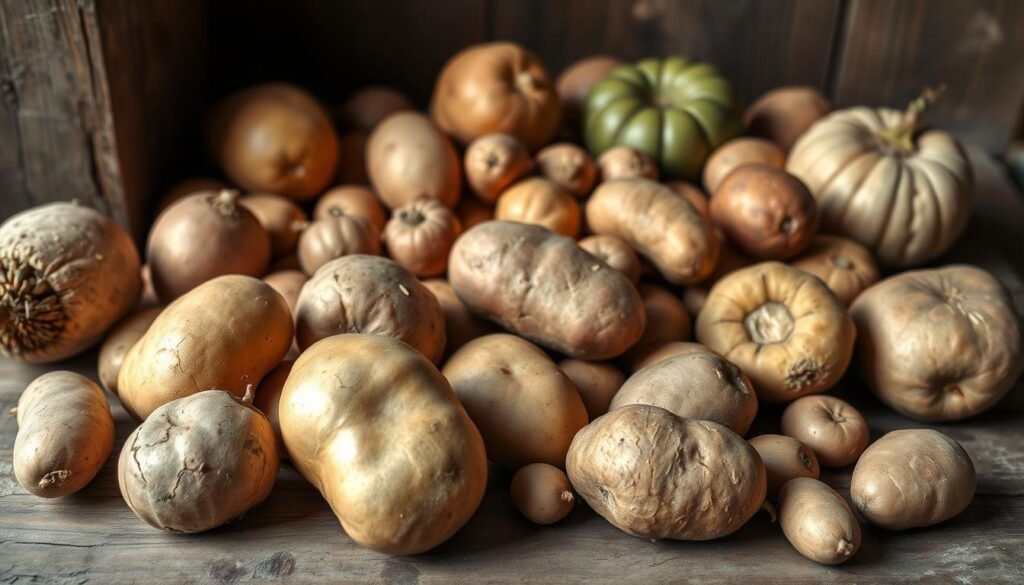
To avoid greening, pick potatoes that are known to resist it. Some heritage varieties are made to be tough and less sensitive to light. When you’re shopping, check the labels or ask about the variety.
Choosing the right potato can help prevent greening. Always check your potatoes before eating them. This way, you can spot any signs of too much greening.
Common Myths About Green Potatoes
It’s important to know the truth about green potatoes. Many myths make people unsure if they’re safe to eat.
Some myths say any green potato is bad and should be thrown away. But, it’s not the green color that’s the problem. It’s the chance of solanine, a harmful substance, being made.
| Myth | Fact |
|---|---|
| All green potatoes are toxic. | The green color indicates potential solanine production, but not all green potatoes are toxic. |
| Cutting away the green parts makes the potato safe. | While removing green parts can help, it may not eliminate all toxins. |
Knowing the truth about these myths helps you make better choices. Always look for other signs of spoilage like softness or a bad smell.
By understanding the risks and how to avoid them, you can safely enjoy potatoes.
Green Potatoes in Commercial Production
Green potatoes are a big problem for commercial producers. They must follow strict safety rules to keep consumers safe.
In potato production, keeping quality high is key. Producers use many ways to stop potatoes from turning green. For example, they store potatoes in dark, cool places. This helps prevent green color from showing up.
- Rules about solanine levels are very strict. Many countries have limits for commercial potatoes.
- Producers must follow these rules to avoid recalls and keep customers’ trust.
- They check the potatoes while they’re stored and take out any green ones before selling.
By following these steps, producers can lower the chance of green potatoes getting to customers. This helps them meet safety rules for potatoes.
Alternative Uses for Green Potatoes
If your potatoes have turned green, don’t throw them away yet. There are other uses for them. Even though they’re not safe for people to eat, green potatoes can still be useful.
Here are some alternative uses for green potatoes:
- Composting: Green potatoes can be added to your compost pile. This creates nutrient-rich soil for your garden.
- Animal feed: Some farmers use green potatoes as feed for animals like chickens or pigs.
- Planting: You can use green potatoes to grow new potatoes. Just let them sprout, then plant them in well-draining soil.
Here’s a comparison of the different alternative uses for green potatoes:
| Use | Benefits | Considerations |
|---|---|---|
| Composting | Creates nutrient-rich soil | Requires composting setup |
| Animal feed | Provides nutrition for animals | Ensure safe consumption for animals |
| Planting | Produces new potatoes | Requires proper sprouting and planting |
By exploring these alternative uses, you can reduce food waste. You can also make the most of your green potatoes.
Conclusion
You now know the dangers of eating potatoes with green spots. These spots mean the potatoes have a lot of solanine, a harmful substance. It’s crucial to handle and store potatoes right to keep them safe.
Always check potatoes for green spots or sprouts before eating them. If a potato is mostly green, it’s safer to throw it away. This is especially true for kids and older people.
In short, while potatoes are good for you, green ones can be harmful. Knowing why potatoes turn green and how to stop it helps you eat them safely. Always put potato safety first to avoid health problems from green potatoes.
FAQ
What causes green spots on potatoes?
Green spots on potatoes come from light, damage, or certain conditions. These cause chlorophyll and solanine to form.
Is solanine toxic?
Yes, solanine is toxic in large amounts. It can cause stomach problems, brain effects, and other health issues.
Can I eat potatoes with green spots if I peel them?
Peeling can lower solanine levels. But, it’s not always safe. If the green is deep or the potato is old, it’s safer to throw it away.
How can I prevent potato greening at home?
Keep potatoes cool, dark, and well-ventilated. Use containers that let air in to keep them dry.
Are some potato varieties more resistant to greening?
Yes, some potatoes are bred to resist greening. Choosing these can lower the risk of green spots.
Can I use green potatoes for animal feed or compost?
Yes, green potatoes not safe for people can be used for animals or compost. It helps reduce waste.
Are there regulations on solanine levels in commercial potatoes?
Yes, commercial potatoes have rules for solanine levels. This ensures they are safe for consumers.
How can I check if a green potato is safe to eat?
You can taste them to see if they’re bitter. But, this method isn’t perfect. Always be careful.

Hello, I am Bellamy George, a certified nutritionist and food safety specialist from Springfield, IL. With a degree in Food Science, I share research-backed insights on edible foods, seeds, and seafood for safe, informed eating.