

Ever thought about eating bananas with a few black spots? These spots can make you worry about their safety.
Bananas are a common fruit in many homes. Sometimes, they develop black spots as they ripen. But are these spots a sign of spoilage or just a natural part of ripening?
It’s important to know if bananas with black spots are safe to eat. This knowledge helps us avoid wasting food and get the most nutritional value. Let’s look into what makes bananas with black spots safe or not.
Contents
- 1 Why Bananas Develop Black Spots
- 2 Can You Eat Bananas with Black Spots?
- 3 Nutritional Benefits of Ripe Spotted Bananas
- 4 Creative Ways to Use Spotted Bananas
- 5 Conclusion
- 6 FAQ
- 6.1 Are bananas with black spots safe to eat?
- 6.2 What causes black spots on bananas?
- 6.3 How can I tell if a banana with black spots has gone bad?
- 6.4 Are ripe spotted bananas nutritious?
- 6.5 Can I use overripe bananas for baking or cooking?
- 6.6 How can I store bananas to prevent them from developing black spots too quickly?
- 6.7 Can I freeze bananas with black spots?
Why Bananas Develop Black Spots
Bananas get black spots as they ripen naturally. This happens because of ethylene, a gas that helps them ripen.
Ethylene Production and its Effects
Ethylene production goes up as bananas ripen. This gas starts a series of chemical reactions. These reactions break down chlorophyll and create new pigments, turning bananas yellow.
As bananas keep ripening and making more ethylene, starches turn into sugars. This makes them sweeter. But, if bananas get too ripe, they can get black spots. This is because of polyphenol oxidase, an enzyme that causes the fruit to brown.
| Stage | Description | Ethylene Production |
|---|---|---|
| Green | Unripe bananas, firm and starchy | Low |
| Yellow | Ripe bananas, sweet and softening | Moderate |
| Spotted | Overripe bananas, sweeter with black spots | High |
Knowing how ethylene affects banana ripening explains why black spots happen. Even though it might seem like bananas with black spots are bad, they’re actually just very ripe and sweet.
Can You Eat Bananas with Black Spots?
Ever wondered if bananas with black spots are safe to eat? The answer is mostly yes, but with some important notes. Bananas with black spots are usually overripe, not rotten. But, it’s key to check them for other signs of spoilage.
When checking bananas with black spots, look for these signs of spoilage:
- Mold or fungus growing on the skin or stem
- A strong, unpleasant odor
- Soft, mushy, or slimy texture
- Visible signs of insects or worms
If your bananas show any of these signs, it’s safer to throw them away. But, if they’re just overripe with a few black spots, they’re okay to eat. Overripe bananas are sweeter and softer, great for baking, smoothies, or cooking.
To keep your bananas fresh longer, store them at room temperature, away from sunlight. If you won’t use them right away, peel and freeze them for later in recipes.
Tips for Using Overripe Bananas
Here are some creative ways to use bananas with black spots:
- Make a banana bread or muffins
- Add them to a smoothie for natural sweetness
- Use them in pancake or waffle batter
By knowing the signs of spoilage and using your bananas smartly, you can enjoy eating spotted bananas while reducing waste.
Nutritional Benefits of Ripe Spotted Bananas
Ripe spotted bananas are full of nutrients. As they ripen, they become sweeter and easier to digest. This change also makes their nutrients more available to our bodies.
These bananas are a great source of vitamins and minerals. They are especially high in potassium, which is good for blood pressure and bones. They also have vitamin C, vitamin B6, and manganese, helping our immune system and metabolism.
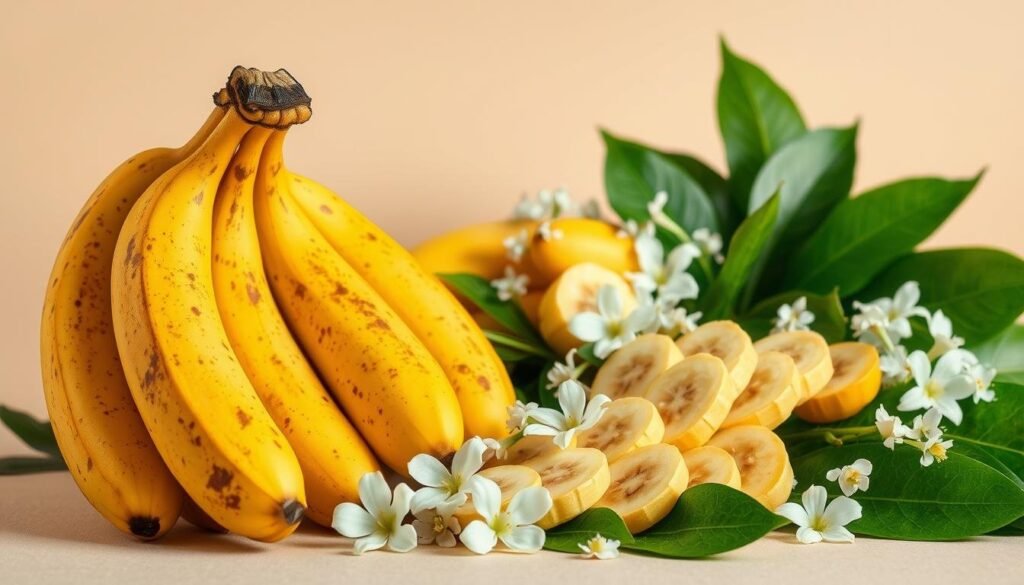
The ripening process boosts the banana’s antioxidants. Antioxidants fight off free radicals, harmful molecules that can cause diseases. Eating ripe bananas is a tasty way to get more antioxidants.
Comparison of Nutritional Values
| Nutrient | Green Banana | Ripe Banana |
|---|---|---|
| Potassium (mg) | 422 | 487 |
| Vitamin C (mg) | 8.7 | 9.5 |
| Antioxidant Activity | Low | High |
Adding ripe spotted bananas to your diet is good for your health. They’re a quick, healthy snack. You can also use them in smoothies, making them a versatile choice.
Eating ripe bananas can be a simple yet effective way to upgrade your nutritional intake, providing you with essential nutrients and antioxidants.
Creative Ways to Use Spotted Bananas
Spotted bananas are perfect for many recipes, cutting down on waste and boosting kitchen creativity. They can be turned into sweet treats or refreshing drinks.
Making banana bread is a favorite way to use ripe bananas. It needs just a few things: bananas, flour, sugar, eggs, and nuts or chocolate chips. Banana bread is not only tasty but also a smart way to use several bananas at once.
Spotted bananas also shine in smoothies. Mix them with fruits like berries or mango, and a milk of your choice. A bit of honey or cinnamon can make it even better.
Delicious Recipes with Ripe Bananas
Here are some more ideas for using ripe bananas:
- Banana pancakes: Mash ripe bananas and mix with eggs and flour for a delicious breakfast.
- Banana oatmeal: Add sliced bananas to your oatmeal for added sweetness and texture.
- Banana ice cream: Freeze bananas and blend them into a creamy dessert.
| Recipe | Main Ingredients | Preparation Time |
|---|---|---|
| Banana Bread | Ripe bananas, flour, sugar, eggs | 1 hour |
| Banana Smoothie | Ripe bananas, milk, honey, berries | 10 minutes |
| Banana Pancakes | Ripe bananas, eggs, flour | 20 minutes |
Using spotted bananas in your cooking not only cuts down on waste but also makes for tasty meals. Get creative with your ripe bananas and see what tasty dishes you can make.
Conclusion
You can safely enjoy bananas with black spots. They are not only safe but also full of nutrients. The spots make them sweeter and softer.
Using bananas with black spots is a smart way to cut down on waste. They make for a tasty and healthy snack. You can use them in baking or smoothies.
Knowing how to handle bananas with black spots is key. They offer great health benefits. So, when you see them, use them in your cooking or just eat them as is.
FAQ
Are bananas with black spots safe to eat?
Yes, bananas with black spots are safe to eat. The spots mean the banana is ripe and overripe. It’s still good to eat.
What causes black spots on bananas?
Black spots on bananas come from ethylene, a gas bananas make as they ripen. More ethylene means more spots.
How can I tell if a banana with black spots has gone bad?
Look for mold, sliminess, or a sour smell. If you see these, throw it away. Otherwise, it’s probably okay to eat.
Are ripe spotted bananas nutritious?
Yes, they are. Ripe bananas have more antioxidants, making them healthier. They’re full of potassium, vitamins, and minerals.
Can I use overripe bananas for baking or cooking?
Absolutely. Overripe bananas are great for baking and cooking. They’re sweeter and softer, perfect for banana bread or muffins.
How can I store bananas to prevent them from developing black spots too quickly?
Store bananas at room temperature, away from sunlight. You can also keep them in the fridge to keep them fresh longer.
Can I freeze bananas with black spots?
Yes, you can freeze them. Just peel and freeze for later use in smoothies, baked goods, or as a topping.

Hello, I am Bellamy George, a certified nutritionist and food safety specialist from Springfield, IL. With a degree in Food Science, I share research-backed insights on edible foods, seeds, and seafood for safe, informed eating.