
Last updated on September 13th, 2025 at 11:22 am
Have you ever wondered if it’s safe to eat rice noodles without cooking them? This question comes up a lot. It’s because more people are interested in raw and lightly processed foods.
Rice noodles are very common in many foods, especially in Asian dishes. Usually, they are cooked before eating. But some people wonder if they can eat them raw. It’s important to think about the risks of eating uncooked rice noodles.
This article will look into the safety of eating rice noodles raw. We’ll talk about the dangers of uncooked rice noodles safety. Knowing this can help you make better choices about what you eat.
Contents
- 1 What Are Rice Noodles?
- 2 How Rice Noodles Are Manufactured
- 3 Can You Eat Rice Noodles Uncooked?
- 4 Potential Risks of Consuming Uncooked Rice Noodles
- 5 Nutritional Differences Between Raw and Cooked Rice Noodles
- 6 Proper Methods for Preparing Rice Noodles
- 7 Alternatives to Traditional Cooking Methods
- 8 Creative Ways to Use Rice Noodles
- 9 Rice Noodles vs. Other Types of Noodles
- 10 Storage and Shelf Life of Rice Noodles
- 11 Conclusion
- 12 FAQ
- 12.1 What are rice noodles made of?
- 12.2 Are rice noodles gluten-free?
- 12.3 Can you eat rice noodles raw?
- 12.4 How do you store rice noodles?
- 12.5 What is the shelf life of rice noodles?
- 12.6 How do you cook rice noodles?
- 12.7 Can you reheat cooked rice noodles?
- 12.8 Are rice noodles a good source of nutrition?
- 12.9 Can you use rice noodles in cold dishes?
- 12.10 How do rice noodles compare to other types of noodles?
What Are Rice Noodles?
Rice noodles are a key ingredient in many Asian dishes. They are made from rice flour and water. You can find them in various shapes and sizes, perfect for different recipes.
Thin Rice Vermicelli
Thin rice vermicelli, or rice stick noodles, are delicately thin. They’re great in soups, salads, and spring rolls. They cook fast, usually in just a few minutes, making them easy to use in many meals.
Wide Rice Noodles (Pad Thai Style)
Wide rice noodles are flat and wide, perfect for stir-fries and other dishes. They need to be soaked in hot water to soften before stir-frying with other ingredients.
Rice paper sheets are mainly used for spring rolls. Unlike other rice noodles, they’re not boiled. Instead, they’re soaked in water to become pliable, then filled and wrapped.
Knowing the different types of rice noodles can make cooking better. Whether you’re making a hearty soup or a fresh salad, rice noodles add versatility and flavor.
How Rice Noodles Are Manufactured
Learning about how rice noodles are made can help you understand their quality and how long they last. It starts with rice flour mixed with water to make a dough. Then, this dough is turned into thin sheets or strands, depending on the noodle type.
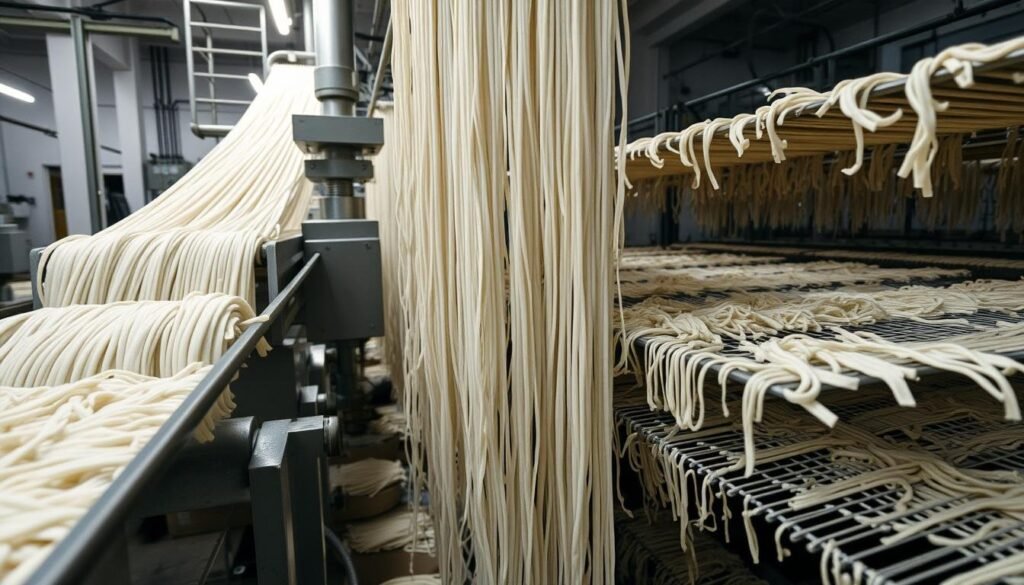
The making of rice noodles involves several important steps. First, the rice flour is ground into a fine powder. Then, it’s mixed with water to create a dough. This dough is shaped into thin sheets or cut into noodle strands.
Drying Techniques
Drying is a key step in making rice noodles. There are a few drying methods, like air drying and machine drying. Air drying uses natural air, while machine drying uses heat and humidity to dry faster.
Preservation Methods
To keep rice noodles fresh, manufacturers use different methods. They package the noodles in airtight bags or containers to keep moisture out. Some also use vacuum packaging or nitrogen flushing to remove oxygen and prevent spoilage.
Knowing how rice noodles are made, including drying and preservation, shows the effort put into quality. This knowledge helps you choose the best rice noodles for your meals.
Can You Eat Rice Noodles Uncooked?
Eating rice noodles without cooking them is safe if they meet certain standards. We must look at how they are made and their starch content. This includes checking the production process, food safety rules, and what makes rice noodles special.
Processing Standards
Rice noodles come from rice flour and water. First, rice is ground into flour. Then, it’s mixed with water and shaped into noodles. The noodles are cooked or steamed to make the starch gelatinize, and then dried.
- High-quality rice flour is used to minimize impurities.
- Water content is controlled to achieve the right texture.
- Some manufacturers may use additional ingredients for texture or preservation.
Food Safety Regulations
Food safety rules are key to making sure rice noodles are safe to eat, cooked or not. These rules cover things like:
- Contaminant limits (e.g., heavy metals, pesticides).
- Microbiological standards to prevent contamination.
- Labeling requirements for ingredients and allergens.
Starch Composition
The starch in rice noodles affects their texture and how easily they are digested. If rice noodles aren’t cooked right, the starch might not gelatinize fully. This can make them harder to digest.
Mouth Feel and Experience
Eating uncooked rice noodles feels different than cooked ones. They can be harder and more brittle. This might not be what everyone prefers.
In summary, while you can eat rice noodles uncooked, it’s important to think about how they are made. We must follow food safety rules, understand the starch, and consider the mouth feel and experience.
Potential Risks of Consuming Uncooked Rice Noodles
Eating uncooked rice noodles can be risky. They might seem like a quick snack, but they can carry harmful contaminants. This can lead to health problems.
Manufacturing Environment Factors
The place where rice noodles are made is key to their safety. Contamination can happen if the factory doesn’t follow clean standards. This can introduce dangerous bacteria or other harmful germs.
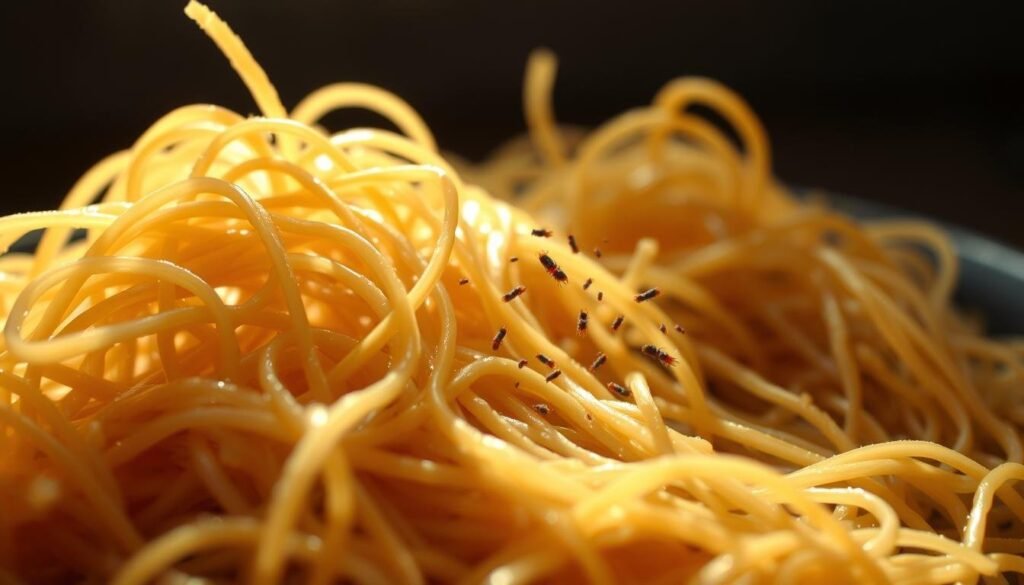
How rice noodles are stored is also important. If they’re kept in humid or dirty spots, they can grow mold and bacteria. It’s best to keep them in a cool, dry area to avoid these issues.
Resistant Starch Effects
Rice noodles have resistant starch, which is good for some but can upset others’ stomachs. Eating uncooked rice noodles might cause digestive discomfort for those who are sensitive to it.
Potential Allergic Reactions
Some people might be allergic to rice or ingredients in rice noodles. Eating uncooked rice noodles can cause allergic reactions. These can range from mild to severe.
In summary, while rice noodles are nutritious and easy to eat, they’re not safe if not cooked. Knowing the risks and how to avoid them is important for safe eating.
Nutritional Differences Between Raw and Cooked Rice Noodles
Cooking rice noodles changes their nutritional profile. This affects their glycemic index and fiber content. Cooking them can significantly impact your body, especially in energy release and digestive health.
Glycemic Index Variations
The glycemic index (GI) shows how quickly foods raise blood sugar. Cooking rice noodles slightly lowers their GI because heat breaks down starches. This makes them easier to digest. But, the change is not big, and rice noodles have a moderate GI.
Fiber Content Differences
Cooking also changes the fiber in rice noodles. The fiber content stays mostly the same, but cooking makes it more digestible. Still, rice noodles are not high in fiber, whether raw or cooked.
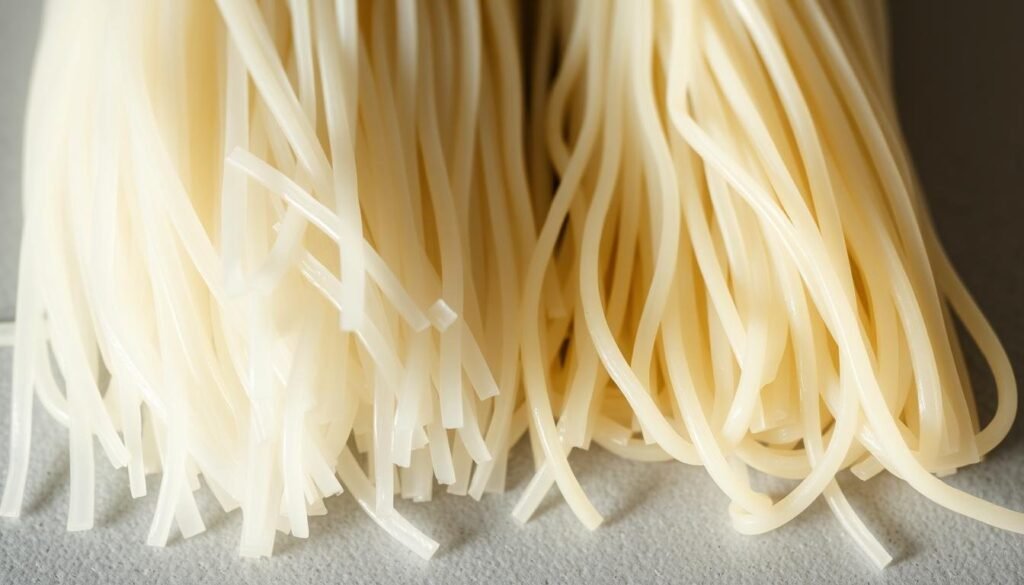
In summary, cooking rice noodles has some nutritional differences. But these changes are small. Knowing these differences helps you choose how to use rice noodles in your diet.
Proper Methods for Preparing Rice Noodles
To enjoy rice noodles at their best, it’s crucial to prepare them correctly. The right preparation method can make a big difference in the texture and overall dining experience.
Cold Water Soaking Technique
One popular method for preparing rice noodles is the cold water soaking technique. Simply submerge the noodles in cold water for about 30 minutes, or until they become soft and pliable. This method is ideal for salads or cold dishes.
Hot Water Preparation
For hot dishes, you can prepare rice noodles by soaking them in hot water. The soaking time will vary depending on the thickness of the noodles, but generally, it takes between 5 to 10 minutes. Be careful not to overcook them, as this can result in a mushy texture.
The thickness of the rice noodles is a critical factor in determining the preparation method. Thicker noodles may require longer soaking times, while thinner noodles can be ready in just a few minutes. Understanding the specific needs of your noodles is key to perfectly cooked rice noodles.
By Intended Dish
The dish you plan to make also influences how you should prepare your rice noodles. For example, if you’re making a stir-fry, you might want to slightly undercook the noodles so they retain some firmness during the cooking process. For cold dishes, ensuring the noodles are fully rehydrated is crucial.
By considering these factors and choosing the appropriate preparation method, you can enjoy your rice noodles at their best. Whether you’re using the cold water soaking technique or hot water preparation, the key is to understand the specific needs of your noodles and the dish you’re preparing.
Alternatives to Traditional Cooking Methods
Exploring new ways to cook rice noodles can make your meals better. You can get perfectly cooked noodles without boiling them.
Time-Saving Techniques
Using a microwave is a quick way to cook rice noodles. Just put the noodles in a microwave-safe bowl, add water, and heat for 2-3 minutes. Soaking the noodles in hot water for a few minutes is also fast. This is great when you’re in a hurry or don’t have a stove.
Texture Considerations
The texture of rice noodles changes with cooking methods. Pan-frying cooked noodles adds a nice crunch. Heat oil in a pan, add the noodles, and stir-fry until golden.
Steaming rice noodles makes them softer. Steaming keeps their delicate flavor and texture.
Trying different cooking methods can improve your rice noodle dishes. Whether you want a quick meal or a fancy dish, these options are versatile in the kitchen.
Creative Ways to Use Rice Noodles
Rice noodles open up a world of flavors, from savory to sweet. You can try out many rice noodles recipes to spice up your meals.
Vietnamese Phở and Spring Rolls
Vietnamese food is famous for its rice noodles. Phở is a warm noodle soup with beef and herbs. Spring rolls are fresh and tasty.
Thai Pad Thai and Drunken Noodles
Thai dishes also feature rice noodles a lot. Pad Thai is a stir-fry with shrimp and tofu. Drunken Noodles are spicy, with wide noodles, meat, and veggies.
Rice noodle salads are a great creative use for rice noodles. Mix cooked noodles with veggies, herbs, and a tangy dressing. They’re perfect for hot days.
Dessert Applications
Rice noodles can even be used in desserts. Try a sweet rice noodle pudding with coconut milk and sugar. Add toppings like sesame seeds or fruit.
| Dish | Main Ingredients | Cuisine |
|---|---|---|
| Phở | Rice noodles, beef broth, beef, herbs | Vietnamese |
| Pad Thai | Rice noodles, shrimp, tofu, peanuts | Thai |
| Rice Noodle Salad | Rice noodles, vegetables, herbs, dressing | Varied |
| Rice Noodle Pudding | Rice noodles, coconut milk, sugar | Dessert |
Adding rice noodles to your cooking can bring new tastes and textures. It makes meals more fun and diverse.
Rice Noodles vs. Other Types of Noodles
The noodle aisle can be overwhelming. But, comparing rice noodles to mung bean, kelp, and vegetable noodles helps clarify your options. Knowing their differences is key when deciding which to use in your cooking.
Mung bean noodles are made from mung bean starch. They have a different nutritional profile than rice noodles. They are clearer and more gelatinous when cooked.
Unlike rice noodles, mung bean noodles are more protein-dense. This makes them a favorite for those wanting to boost their protein intake.
Kelp and Vegetable Noodles
Kelp and vegetable noodles are alternatives that are often lower in carbs. They are richer in vitamins and minerals. Kelp noodles, for example, are made from kelp seaweed and water. They are a good source of iodine.
Vegetable noodles, on the other hand, are made from various vegetables. They can be a nutritious substitute for traditional noodles, including rice noodles.
When choosing between rice noodles and other types, think about nutritional content, texture, and your recipe’s needs. Each noodle type has its own unique qualities. This makes some better for certain dishes than others.
Storage and Shelf Life of Rice Noodles
To keep your rice noodles fresh, it’s key to know the best storage methods. Proper storage extends shelf life and keeps quality high.
Dry Storage Techniques
Keep unopened rice noodles in a cool, dry spot, away from sunlight. After opening, put them in an airtight container to stay fresh.
Refrigeration of Cooked Noodles
Refrigerate cooked rice noodles within two hours of cooking. Store them in a sealed container and use within 3 to 5 days.
Watch for signs of spoilage like mold, sliminess, or an odd color. If you see these, throw out the noodles.
Odor and Texture Changes
Spoiled rice noodles often smell bad or feel sticky. If they smell sour or feel sticky, it’s best to throw them away.
| Storage Method | Shelf Life |
|---|---|
| Dry Storage | 6-12 months |
| Refrigerated Cooked Noodles | 3-5 days |
Conclusion
You now know the basics of rice noodles. This includes what they’re made of and how they’re made. The main point is that rice noodles can be good for you if you prepare them right.
But, eating raw rice noodles can be risky. It might cause health problems because of contamination or stomach issues. Cooking them properly makes them safer and more nutritious.
By following the tips in this article, you can add rice noodles to your diet safely. It’s also important to store and handle them correctly to keep them fresh and safe.
In short, the safety and preparation of rice noodles go hand in hand. Being aware and taking the right steps lets you enjoy the benefits of rice noodles in your cooking.
FAQ
What are rice noodles made of?
Rice noodles are made from rice flour and water. They might also have tapioca or cornstarch to make them better.
Are rice noodles gluten-free?
Yes, rice noodles don’t have gluten. This makes them good for people who can’t eat gluten.
Can you eat rice noodles raw?
You can eat rice noodles raw, but it’s not always safe. It might cause stomach problems.
How do you store rice noodles?
Keep rice noodles in a cool, dry spot. Away from sunlight. Store them in an airtight container after opening.
What is the shelf life of rice noodles?
Rice noodles last several months if stored right. It depends on where you keep them.
How do you cook rice noodles?
Cook rice noodles by soaking them in hot water or boiling. The method changes based on the noodles you have.
Can you reheat cooked rice noodles?
Yes, you can reheat rice noodles. Make sure they’re hot enough to avoid getting sick.
Are rice noodles a good source of nutrition?
Rice noodles are mostly carbs. They’re okay in a diet with other nutrient-rich foods.
Can you use rice noodles in cold dishes?
Yes, rice noodles work well in cold dishes. They’re great in salads because of their texture.
How do rice noodles compare to other types of noodles?
Rice noodles are different from wheat or egg noodles. They have their own taste and texture. They’re often used in Southeast Asian dishes.

Hello, I am Bellamy George, a certified nutritionist and food safety specialist from Springfield, IL. With a degree in Food Science, I share research-backed insights on edible foods, seeds, and seafood for safe, informed eating.