
Last updated on September 13th, 2025 at 11:23 am
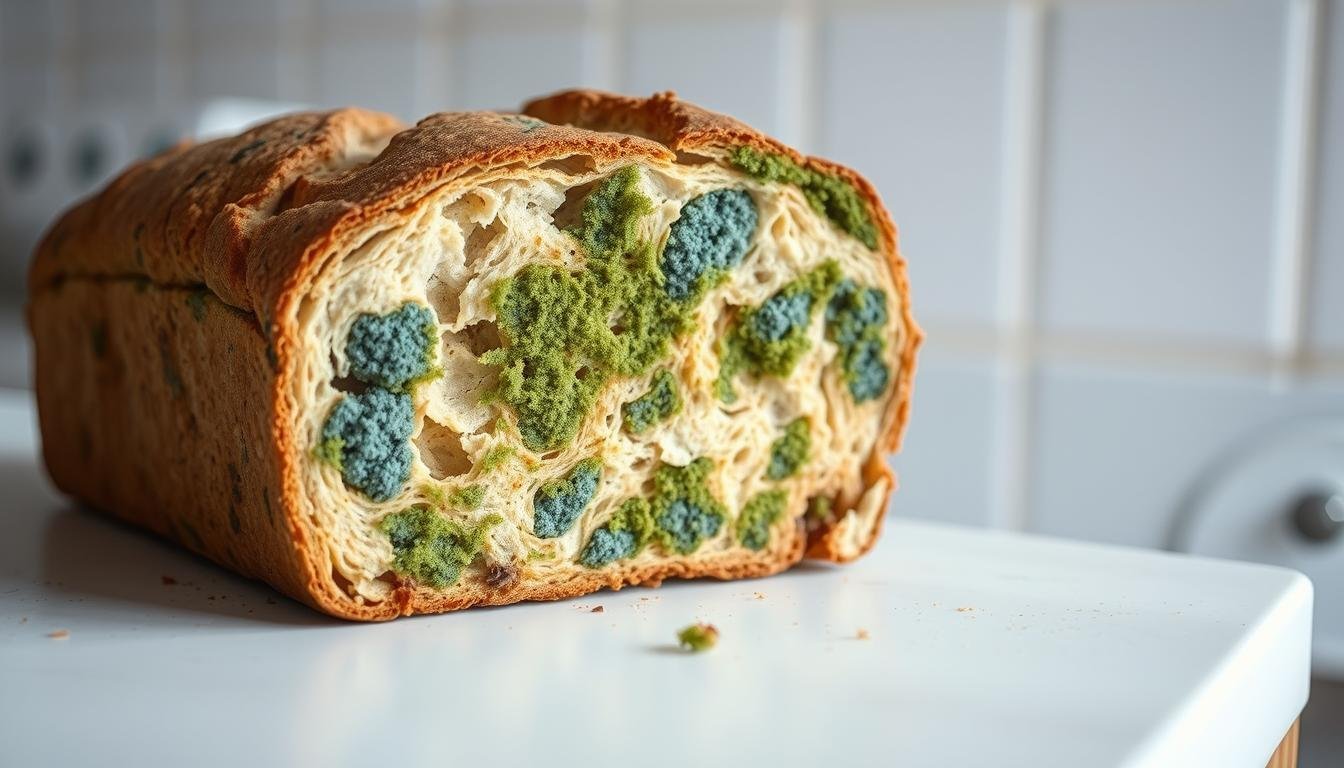
Ever looked at bread and wondered if it’s still okay to eat? Mold grows fast on bread, especially when it’s moist and warm. You might think about cutting off the moldy part instead of throwing the bread away.
But, you should really think about food safety first. Some molds can make mycotoxins, which are bad for you. Knowing the dangers of eating moldy bread is key to making the right choice.
So, what should you do with moldy bread? We’ll look at important factors and give tips on how to safely deal with it.
Contents
- 1 Understanding Bread Mold: What It Is and How It Forms
- 2 Is It Safe to Eat Moldy Bread If You Cut the Mold Off?
- 3 Health Risks Associated with Consuming Moldy Bread
- 4 When Cutting Off Mold Might Be Acceptable
- 5 Better Alternatives to Eating Moldy Bread
- 6 What Experts and Food Safety Organizations Say
- 7 Summary of Moldy Bread Safety
- 8 FAQ
- 8.1 What is bread mold, and how does it form?
- 8.2 Can you eat moldy bread if you cut off the mold?
- 8.3 What are the health risks associated with consuming moldy bread?
- 8.4 How can you prevent bread from becoming moldy?
- 8.5 Are there any scenarios where cutting off mold might be acceptable?
- 8.6 What do food safety experts say about eating moldy bread?
- 8.7 Can you preserve bread to make it last longer?
Understanding Bread Mold: What It Is and How It Forms
Bread mold grows because of moisture and temperature. Warm, humid places make bread a perfect spot for mold.
Common Characteristics of Bread Mold
Bread mold can be white, green, or black. It might look fuzzy or slimy. The usual types are Aspergillus, Penicillium, and Fusarium. These molds can make harmful toxins.
Mold on bread usually means it was stored wrong. To stop mold, keep bread cool and dry. Freezing bread can also help it last longer.
Knowing about bread mold is key to deciding if it’s safe to eat. Spotting mold early helps prevent it. This way, your bread stays fresh longer.
Is It Safe to Eat Moldy Bread If You Cut the Mold Off?
There’s a big debate about eating moldy bread after cutting off the mold. Some think that since the mold is only on the surface, it’s safe to eat the rest. But, mold can go deeper into soft or moist bread.
Mold can produce mycotoxins, which are harmful toxins. These toxins can spread through the bread, making it unsafe even after removing the mold. This is especially true for bread that’s moist or damaged, letting mold spread easily.
Deciding if you should eat moldy bread depends on the bread type and mold extent. For hard cheeses and cured meats, cutting off the moldy part might be okay. But, bread is different because of its texture and the risk of mycotoxin spread.
In summary, while some believe cutting off mold makes bread safe, the risks of mycotoxins and mold spread are too high. It’s generally not a good idea to eat moldy bread, even after removing the mold.
Health Risks Associated with Consuming Moldy Bread
Moldy bread is not just a cosmetic issue; it poses health risks. Eating bread with mold can cause allergic reactions and breathing problems. The mold can also produce mycotoxins, harmful substances that can harm your health if eaten.
- Allergic reactions, such as skin rashes or itching
- Respiratory issues, like sneezing or difficulty breathing
- Gastrointestinal problems, including nausea or diarrhea
Vulnerable Populations
Some groups face higher risks from moldy bread. These include:
| Vulnerable Group | Reason for Vulnerability |
|---|---|
| Older Adults | Weakened immune systems |
| Pregnant Women | Increased sensitivity to toxins |
| People with Compromised Immune Systems | Reduced ability to fight off infections |
These groups should be extra careful about eating moldy bread. Their bodies might struggle more with the toxins it contains.
When Cutting Off Mold Might Be Acceptable
You might be able to safely remove mold from bread under specific conditions. The key to safe removal lies in understanding the type of bread you’re dealing with and the extent of the mold growth.
For hard or dense breads, such as sourdough or bagels, it might be possible to cut off the moldy part. It’s crucial to cut off at least an inch around and below the moldy area to ensure you remove any potentially contaminated parts. However, for soft or moist breads, like white bread or pastries, it’s generally not recommended to try to cut off the mold, as the mold can penetrate deeper into the bread.
To follow moldy bread safety tips, always inspect the bread carefully before deciding to cut off the mold. If the bread is old, has a strong moldy smell, or is heavily infested, it’s best to discard it. Additionally, ensure your knife is clean and won’t spread the mold spores to other foods.
By understanding these guidelines, you can make an informed decision about whether it’s safe to eat your bread after removing the mold. Always prioritize caution when dealing with moldy food to avoid potential health risks.
Better Alternatives to Eating Moldy Bread
You don’t have to eat moldy bread. There are better ways to store and preserve it. One simple method is to store it properly.
Bread Preservation Techniques
There are several ways to keep your bread fresh. Freezing and using bread keepers are two effective methods. Freezing bread can extend its shelf life.
Just place the bread in a freezer-safe bag or wrap it tightly. Use plastic wrap or aluminum foil.
| Preservation Method | Description | Benefits |
|---|---|---|
| Freezing | Wrap bread tightly and store in the freezer. | Extends shelf life, preserves freshness. |
| Bread Keepers | Store bread in a cool, dry place using a bread keeper. | Maintains freshness, easy to use. |
| Room Temperature Storage | Store bread in a paper bag or bread box at room temperature. | Easy, no special equipment needed. |
By using these bread storage tips and methods, you can enjoy fresh bread longer. This way, you avoid eating moldy bread.
What Experts and Food Safety Organizations Say
Experts and food safety groups share their views on moldy bread. They say it’s important to follow clear food safety rules when deciding if it’s safe to eat.
The USDA gives tips on dealing with moldy bread. For hard cheeses and cured meats, cutting off the moldy part is often suggested. But, bread is different because it’s so porous.
Most experts say it’s best not to eat moldy bread, especially if it’s old or has a lot of mold. The type of bread and how much mold it has are key in deciding what to do with it.
| Bread Type | Mold Visibility | Recommended Action |
|---|---|---|
| Soft Bread | Visible mold on surface | Discard |
| Hard Bread | Mold penetration | Discard if mold is deep |
| All Bread | Mold with slime or bad odor | Discard |
By following these food safety tips, you can make better choices about moldy bread. It’s always safer to be cautious when it comes to food.
Summary of Moldy Bread Safety
You now know the dangers of eating moldy bread. It’s especially risky for people with weak immune systems. This is because mold can cause health problems.
It’s important to check your bread often and keep it stored right. This helps stop mold from growing. If you’re unsure, it’s safer to throw away the bread to avoid health issues.
Being careful about the bread you eat and how you handle it can help. This way, you can enjoy your bread without worrying about mold.
FAQ
What is bread mold, and how does it form?
Bread mold is a fungus that grows on bread in damp places. It starts when mold spores land on the bread. Then, they break down the bread’s starches and sugars.
Can you eat moldy bread if you cut off the mold?
It’s not safe to eat moldy bread, even if you remove the mold. Some molds can spread toxins deep into the bread. This makes it risky to eat.
What are the health risks associated with consuming moldy bread?
Eating moldy bread can cause allergic reactions and breathing problems. It can also lead to other health issues. People like the elderly, young kids, and those with weak immune systems are more at risk.
How can you prevent bread from becoming moldy?
Keep bread away from moisture and heat. Store it in a cool, dry place like a bread box or pantry. Freezing bread can also help it last longer.
Are there any scenarios where cutting off mold might be acceptable?
If the mold is just on the surface of dense bread, like sourdough or baguette, you might be okay. Cut off at least an inch around the mold. But, it’s still risky, and caution is key.
What do food safety experts say about eating moldy bread?
Food safety experts, like those at the USDA, say no to moldy bread. It can be harmful to your health. They suggest throwing away moldy bread and buying fresh instead.
Can you preserve bread to make it last longer?
Yes, you can keep bread fresh by freezing it or storing it in airtight containers. You can also use methods like wrapping it in plastic wrap or foil.

Hello, I am Bellamy George, a certified nutritionist and food safety specialist from Springfield, IL. With a degree in Food Science, I share research-backed insights on edible foods, seeds, and seafood for safe, informed eating.