
Last updated on September 13th, 2025 at 11:24 am
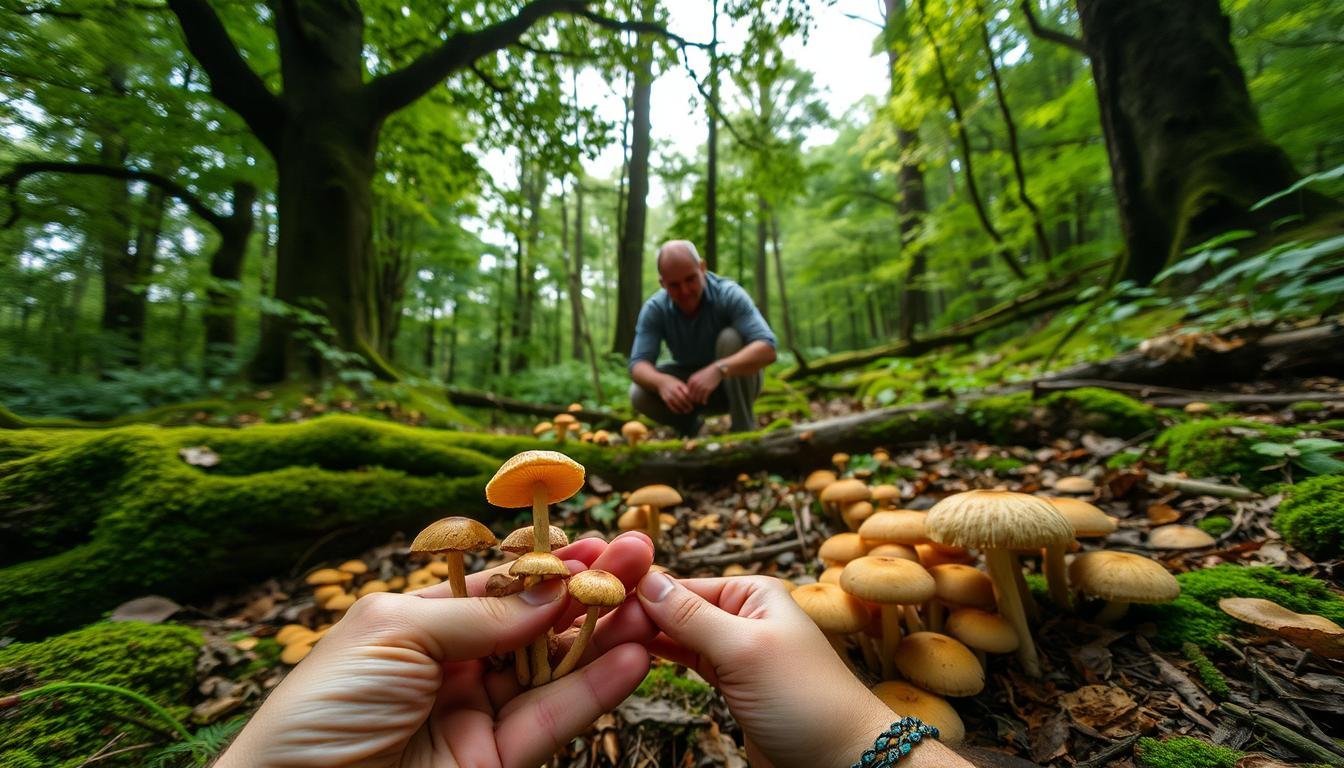
Foraging for wild mushrooms is exciting, especially for those who love the outdoors. The thought of picking and eating mushrooms right from nature is tempting. But, it’s important to think about safety.
The charm of wild mushrooms is real, but there are dangers. Some mushrooms can be poisonous, causing serious health problems. So, it’s vital to be careful and know what you’re doing.
Learning the basics of wild mushrooms and how to handle them safely is crucial. This way, you can enjoy foraging without worrying about your health.
Contents
- 1 The Risks of Eating Wild Mushrooms
- 2 Can You Eat Mushrooms Straight from the Ground?
- 3 Identifying Safe Wild Mushrooms
- 4 Proper Preparation of Wild Mushrooms
- 5 Eating Wild Mushrooms Safely: A Summary
- 6 FAQ
- 6.1 Are all wild mushrooms poisonous?
- 6.2 How can I identify edible wild mushrooms?
- 6.3 What are the risks of eating wild mushrooms?
- 6.4 Can I eat mushrooms raw?
- 6.5 How do I clean wild mushrooms?
- 6.6 Can I forage for wild mushrooms anywhere?
- 6.7 What are some common edible wild mushrooms?
- 6.8 Can I grow wild mushrooms in my backyard?
The Risks of Eating Wild Mushrooms
Foraging for wild mushrooms can be exciting, but it’s important to know the health risks. Some mushrooms are safe, but others can be toxic and even deadly. It’s crucial to understand the dangers before eating them.
One big risk is allergic reactions. Some people might be allergic to certain mushrooms. This can cause mild to severe symptoms, even life-threatening ones. Also, some mushrooms have toxins that can poison you, which can be very serious or even fatal.
The dangers of eating wild mushrooms are serious. Here’s a table showing some symptoms of mushroom poisoning:
| Symptom | Description | Severity |
|---|---|---|
| Nausea and Vomiting | Feeling queasy or vomiting after consumption | Mild to Severe |
| Abdominal Pain | Cramping or pain in the abdominal region | Moderate to Severe |
| Diarrhea | Frequent or loose stools | Mild to Moderate |
| Headache and Dizziness | Feeling dizzy or experiencing headaches | Mild to Moderate |
It’s critical to know these risks and take precautions. Learning to identify safe mushrooms and how to prepare them can lower the risks.
In short, while wild mushrooms can be tasty, the health risks are real. Being informed and careful can make eating them safer and more fun.
Can You Eat Mushrooms Straight from the Ground?
Eating mushrooms from the ground needs caution and knowledge. Not all wild mushrooms are safe to eat.
Some mushrooms can be toxic, leading to health issues from mild to severe. It’s key to know the mushroom type before eating it.
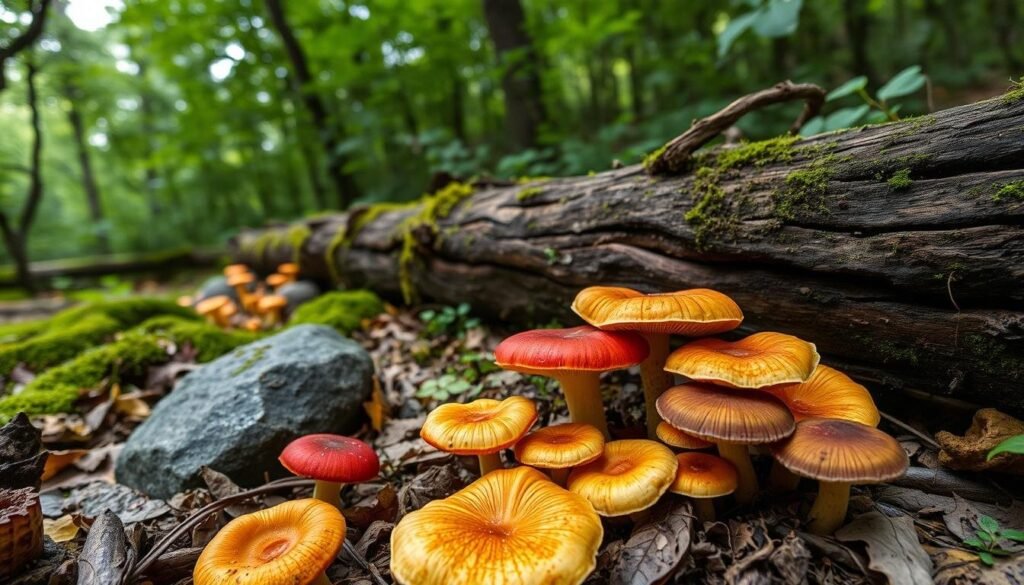
There are edible mushrooms found in the wild, like morel mushrooms and chanterelle mushrooms. They are loved for their unique tastes and textures.
Common Edible Mushrooms
| Mushroom Type | Habitat | Season |
|---|---|---|
| Morel Mushrooms | Moist, wooded areas | Spring |
| Chanterelle Mushrooms | Wooded areas, often near pine | Summer to early Fall |
| Oyster Mushrooms | Decaying wood, trees | Year-round, depending on climate |
Knowing where and when to find these mushrooms is helpful. But, be careful of lookalikes that could be toxic.
To eat wild mushrooms safely, you must be sure of their identity. Talking to an expert or using a field guide is a good idea.
Identifying Safe Wild Mushrooms
Finding safe wild mushrooms needs knowledge, detail, and caution. It’s key to tell edible from poisonous mushrooms to stay safe. This avoids serious health risks.
Start by learning about mushroom features. Edible mushrooms have caps, stems, and gills or pores. Their color, shape, and size differ a lot.
Distinguishing Edible from Poisonous Mushrooms
To tell edible from poisonous mushrooms, look for certain signs. Some poisonous mushrooms have a ring or volva at the stem base. Others smell bad. Be very careful in your observations.
Using a table can help organize mushroom features. Here’s an example showing some differences:
| Characteristic | Edible Mushrooms | Poisonous Mushrooms |
|---|---|---|
| Cap Color | Varied, often brown or white | Varied, some brightly colored |
| Stem Features | Often has a ring or annulus | May have a volva at the base |
| Odor | Typically earthy or nutty | Often strong, unpleasant |
Remember, “when in doubt, throw it out” is true for mushrooms. If unsure, don’t eat it. It’s safer to be cautious.
Proper Preparation of Wild Mushrooms
To enjoy wild mushrooms, knowing how to prepare them is key. Proper preparation makes them taste better and ensures they’re safe to eat.
Cleaning wild mushrooms is a must. They often have dirt, debris, and even insects. Start by gently brushing off dirt with a soft-bristled brush. For delicate mushrooms, a damp cloth works well. But, avoid soaking them in water to keep their texture and flavor right.
Next, cook the mushrooms. The cooking method depends on the mushroom type and desired taste. Sautéing is popular as it keeps the mushroom’s texture and boosts its flavor. Boiling or steaming is good for tenderizing mushrooms in recipes.
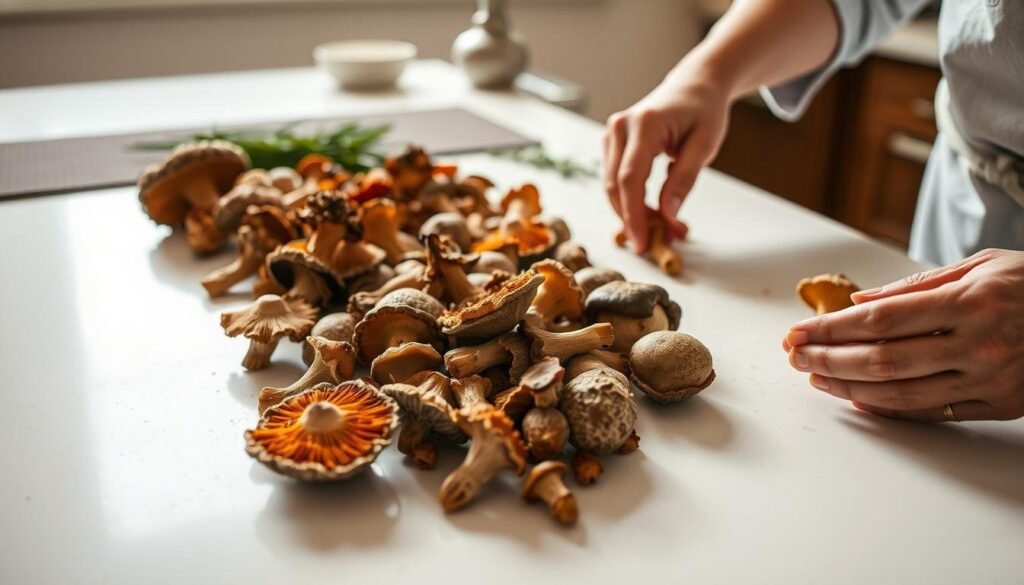
Each cooking method highlights different aspects of wild mushrooms. Here are some common ones:
| Cooking Method | Description | Best For |
|---|---|---|
| Sautéing | Quickly cooking in a pan with a small amount of oil or butter. | Preserving texture and enhancing flavor. |
| Boiling | Cooking in boiling water until tender. | Recipes requiring tender mushrooms. |
| Steaming | Cooking using steam, which helps retain nutrients. | Delicate flavors and textures. |
When cooking wild mushrooms, make sure to cook them well. This removes toxins and makes nutrients more available. Cooking also makes mushrooms safer and more nutritious.
In summary, preparing wild mushrooms means cleaning them well and cooking them right. By following these steps, you can enjoy wild mushrooms safely and healthily.
Eating Wild Mushrooms Safely: A Summary
Foraging for wild mushrooms can be rewarding but requires caution. Eating mushrooms from the ground can be risky due to misidentification and contamination. To enjoy them safely, it’s key to identify them correctly and prepare them properly.
Understanding the risks and taking precautions is vital. Knowing how to identify safe mushrooms and how to prepare them helps minimize risks. This way, you can enjoy their unique flavors and health benefits safely.
In conclusion, being responsible when foraging and eating wild mushrooms is crucial. By being informed and cautious, you can enjoy their flavors and health benefits while staying safe.
FAQ
Are all wild mushrooms poisonous?
No, not all wild mushrooms are poisonous. But, some can be toxic. So, it’s very important to know what you’re eating.
How can I identify edible wild mushrooms?
To find out if a mushroom is safe to eat, look at its shape, color, and how the gills are arranged. It’s also a good idea to talk to an expert or use a trusted field guide.
What are the risks of eating wild mushrooms?
Eating wild mushrooms can be risky. You might have an allergic reaction, get poisoned, or even die if they’re toxic. Some people might also get sick to their stomach.
Can I eat mushrooms raw?
Some wild mushrooms are okay to eat raw. But, it’s usually safer to cook them. Cooking can make them taste better and be safer to eat.
How do I clean wild mushrooms?
To clean wild mushrooms, use a soft-bristled brush to remove dirt. Then, wipe them with a damp cloth. Don’t soak them in water, as they can get too wet.
Can I forage for wild mushrooms anywhere?
No, you shouldn’t look for wild mushrooms anywhere. Make sure to check local rules and avoid places with pollution or pesticides.
What are some common edible wild mushrooms?
Some safe wild mushrooms include chanterelles, oyster mushrooms, and morels. But, it’s very important to be sure of what you’re eating.
Can I grow wild mushrooms in my backyard?
Yes, you can grow some wild mushrooms in your backyard. You just need the right conditions and to know how to grow them.

Hello, I am Bellamy George, a certified nutritionist and food safety specialist from Springfield, IL. With a degree in Food Science, I share research-backed insights on edible foods, seeds, and seafood for safe, informed eating.