

Last updated on September 2nd, 2025 at 11:28 am
Many of us wonder about the best way to enjoy pomegranates. Eating their seeds whole is a great option.
It’s important to know about pomegranate seeds to understand their health benefits. They are packed with antioxidants and vitamins. These tiny seeds offer many health benefits when eaten whole.
Let’s dive into the benefits of eating pomegranate seeds whole. We’ll cover what you need to know to enjoy this nutritious snack.
Contents
- 1 The Anatomy of a Pomegranate Seed
- 2 Can You Eat Pomegranate Seeds Whole?
- 3 Nutritional Profile of Whole Pomegranate Seeds
- 4 Health Benefits of Eating the Entire Seed
- 5 Potential Drawbacks and Considerations
- 6 Selecting and Preparing Pomegranates
- 7 Ways to Enjoy Pomegranate Seeds Whole
- 8 Conclusion
- 9 FAQ
- 9.1 Are pomegranate seeds safe to eat?
- 9.2 Can I eat pomegranate seeds whole, including the arils?
- 9.3 How do I incorporate whole pomegranate seeds into my diet?
- 9.4 Are there any potential allergic reactions to eating pomegranate seeds?
- 9.5 Can eating pomegranate seeds whole cause digestive issues?
- 9.6 How do I store pomegranate seeds to maintain their freshness?
- 9.7 Can I eat pomegranate seeds if I have certain health conditions?
- 9.8 Are pomegranate seeds a good source of antioxidants?
The Anatomy of a Pomegranate Seed
Learning about pomegranate seeds can help us understand their health benefits. A pomegranate seed has two main parts: the outer layer, called the exocarp, and the inner seed coat. This coat surrounds the tasty, red aril.
The aril is the juicy, red part that’s full of vitamins, minerals, and antioxidants. It’s the part of the seed that people usually eat. It’s packed with vitamin C and potassium, making it very nutritious.
- Rich in antioxidants
- Good source of dietary fiber
- High in vitamins C and K
- Contains potassium and other essential minerals
Eating pomegranate seeds whole lets you enjoy their nutrients. This supports your health and well-being.
Can You Eat Pomegranate Seeds Whole?
Eating pomegranate seeds whole can be a healthy choice. But, it’s key to know the implications. These seeds are not only safe to eat but also full of nutrients.
The main worry is how they affect digestion. Pomegranate seeds have a hard outer layer and a soft inner seed. The outer layer is hard to digest but is full of fiber, which helps digestion. Yet, eating too many might upset your stomach.
To safely add whole pomegranate seeds to your meals, follow these tips:
- Start with a small amount to see how your body reacts.
- Chew the seeds well to avoid stomach issues.
- Combine pomegranate seeds with other foods to balance their fiber.
By following these guidelines, you can enjoy the health benefits of pomegranate seeds. They are safe and can be a great addition to your diet.
Nutritional Profile of Whole Pomegranate Seeds
Whole pomegranate seeds are packed with nutrients. They have vitamins, minerals, and antioxidants. Eating them is not just about taste; it’s also about getting lots of health benefits.
These seeds are full of dietary fiber, vitamins C and K, and minerals like potassium and manganese. These nutrients help with digestion, boost your immune system, and improve overall health.
They also have antioxidants like punicalagins and anthocyanins. These protect your cells and may lower inflammation in your body.
Eating whole pomegranate seeds can make your diet better. They are a superfood because of their rich nutritional profile.
To add more pomegranate seeds to your meals, try them as a snack, in salads, or smoothies. They are easy to use and offer many health benefits.
Health Benefits of Eating the Entire Seed
Eating pomegranate seeds whole offers many health benefits. They can improve heart health and reduce inflammation. The seeds are packed with antioxidants, vitamins, and minerals that boost overall wellness.
Whole pomegranate seeds are good for your heart. They contain antioxidants and polyphenols. These help lower heart disease risk by improving blood flow and blood pressure.
Anti-inflammatory Properties of Pomegranate Seeds
Pomegranate seeds have strong anti-inflammatory effects. They can lower the risk of chronic diseases like arthritis, diabetes, and some cancers. The seeds’ anti-inflammatory compounds stop pro-inflammatory enzymes from being made, reducing body inflammation.
The health benefits of eating whole pomegranate seeds include:
- Improved cardiovascular health
- Antioxidant effects
- Anti-inflammatory properties
- Potential reduction in the risk of certain cancers
Adding whole pomegranate seeds to your diet is easy and beneficial. They are rich in nutrients and offer many health benefits. Pomegranate seeds are a great choice for a healthy, balanced diet.
Potential Drawbacks and Considerations
Pomegranate seeds are packed with nutrients, but they can also cause allergic reactions and digestive problems. If you’re allergic or have sensitive digestion, be careful when adding them to your meals.
Some people might have an allergic reaction to pomegranate seeds. This could be hives, itching, or trouble breathing. If you get any of these symptoms, stop eating them and talk to a doctor.
Here are some things to think about:
- Digestive issues: Pomegranate seeds have a lot of fiber. This can upset your stomach in some people.
- Allergic reactions: As mentioned, some people might be allergic to pomegranate seeds.
- Interaction with medications: Pomegranate seeds might affect how certain medicines work, like blood thinners.
To avoid problems, start with a small amount and watch how your body reacts. If you’re worried or have health issues, talk to a doctor before eating pomegranate seeds often.
Knowing about these risks and how to avoid them lets you enjoy pomegranate seeds’ health benefits. This way, you can keep your diet healthy and balanced.
Selecting and Preparing Pomegranates
To enjoy your pomegranate, you need to pick and prepare it right. Choosing a ripe pomegranate is key. Look for ones that are heavy and have a deep red color. Stay away from soft spots or cracks, as they might be overripe or damaged.
Here are some tips for choosing the best pomegranates:
- Check the weight: Ripe pomegranates are heavy.
- Inspect the color: A deep red color is often a sign of ripeness.
- Avoid soft spots: Soft spots or cracks can indicate damage or overripeness.
Techniques for Opening Pomegranates Safely
Opening a pomegranate can be tricky, but with the right method, you can avoid waste. Here’s a simple way:
- Cut off the crown of the pomegranate.
- Score the skin in quarters, being careful not to cut too deeply into the seeds.
- Soak the scored pomegranate in water.
- Gently break apart the quarters underwater, releasing the seeds.
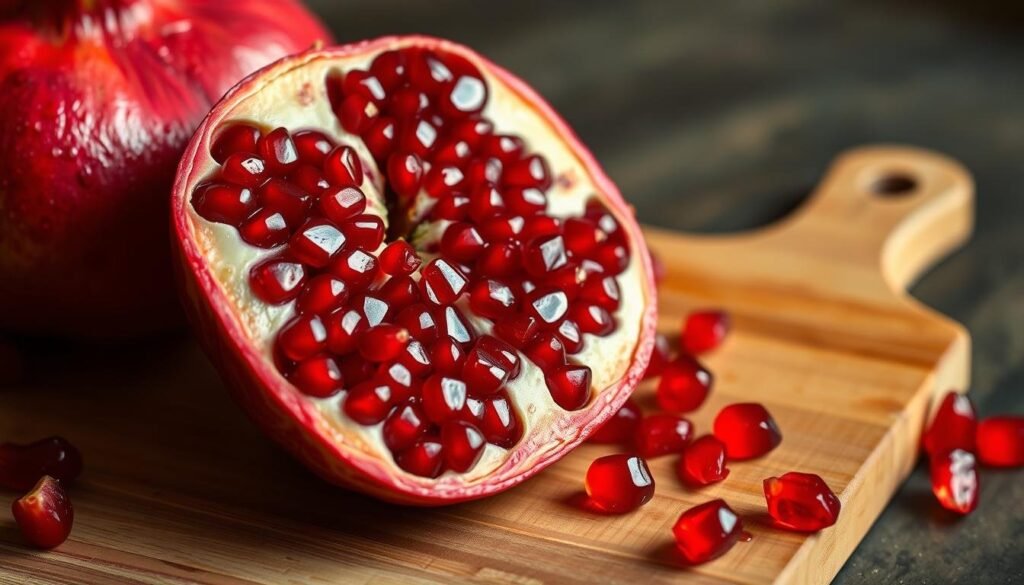
By following these steps, you can enjoy your pomegranate seeds easily. Properpomegranate preparation makes a big difference in enjoying this delicious fruit.
Ways to Enjoy Pomegranate Seeds Whole
You can easily add whole pomegranate seeds to your meals with tasty recipes. These seeds are packed with nutrients and can be used in many dishes, from salads to desserts.
Eating pomegranate seeds whole adds texture and flavor to your food. Sprinkle them on salads or use them as a topping for yogurt or oatmeal.
Recipes Featuring Whole Pomegranate Seeds
- Pomegranate and Arugula Salad: Mix fresh arugula, whole pomegranate seeds, and shaved parmesan cheese for a tasty salad.
- Pomegranate Salsa: Combine whole pomegranate seeds with mango, red onion, and jalapeño for a sweet and spicy salsa.
- Pomegranate and Brie Grilled Cheese: Top a grilled cheese with whole pomegranate seeds and fig jam for a unique flavor.
These ideas are just the start. Try different recipes and find your favorite ways to enjoy whole pomegranate seeds.
Consider adding them to smoothies or as a topping for ice cream or frozen yogurt.
Conclusion
Eating pomegranate seeds whole can add nutrition to your diet. They are full of fiber, vitamins, and minerals. These nutrients help you enjoy the health benefits of pomegranates.
Pomegranate seeds are safe to eat whole. They add a crunchy texture and a burst of flavor to your food. They are also packed with antioxidants and have anti-inflammatory properties.
To get the most from pomegranate seeds, choose fresh pomegranates. Then, prepare them right and add the seeds to your meals. This way, you can boost your health and feel better overall.
FAQ
Are pomegranate seeds safe to eat?
Yes, pomegranate seeds are safe and nutritious. They are packed with fiber, vitamins, and antioxidants.
Can I eat pomegranate seeds whole, including the arils?
Yes, you can eat the whole seed, including the juicy arils. The arils are full of nutrients and are safe to eat.
How do I incorporate whole pomegranate seeds into my diet?
Add them to salads, yogurt, oatmeal, or smoothies. They’re also great as a topping for desserts or savory dishes.
Are there any potential allergic reactions to eating pomegranate seeds?
Rarely, some might be allergic to pomegranate seeds. If you get hives, itch, or have trouble breathing, see a doctor.
Can eating pomegranate seeds whole cause digestive issues?
Some might feel bloated or gassy. But for most, it’s not a problem. The fiber in pomegranate seeds can actually help digestion.
How do I store pomegranate seeds to maintain their freshness?
Store them in an airtight container in the fridge. You can also freeze them for longer storage.
Can I eat pomegranate seeds if I have certain health conditions?
If you have health issues, talk to your doctor first. They can advise on what’s best for you.
Are pomegranate seeds a good source of antioxidants?
Yes, they are. Antioxidants in pomegranate seeds help protect cells and support health.

Hello, I am Bellamy George, a certified nutritionist and food safety specialist from Springfield, IL. With a degree in Food Science, I share research-backed insights on edible foods, seeds, and seafood for safe, informed eating.